
The Decision Starts With Condition
- Repair a refrigerator when the failed part is replaceable and the cabinet, doors and remaining components are sound.
- Replacement usually makes more sense for an older refrigerator with a major sealed-system failure or an essential discontinued board.
- Decide after a diagnosis that considers repair history, parts availability, energy use and the work involved in installing a replacement.
Condition and Parts Shape the Decision
Repair usually makes sense when a wear part has failed and the rest of the appliance remains sound. Replacement usually makes more sense when an older machine has a major sealed-system failure, a damaged tub or drum, or an essential board that is no longer made. Repair or replace appliances according to the diagnosed fault and their overall condition.
Refrigerator condition and cooling faults
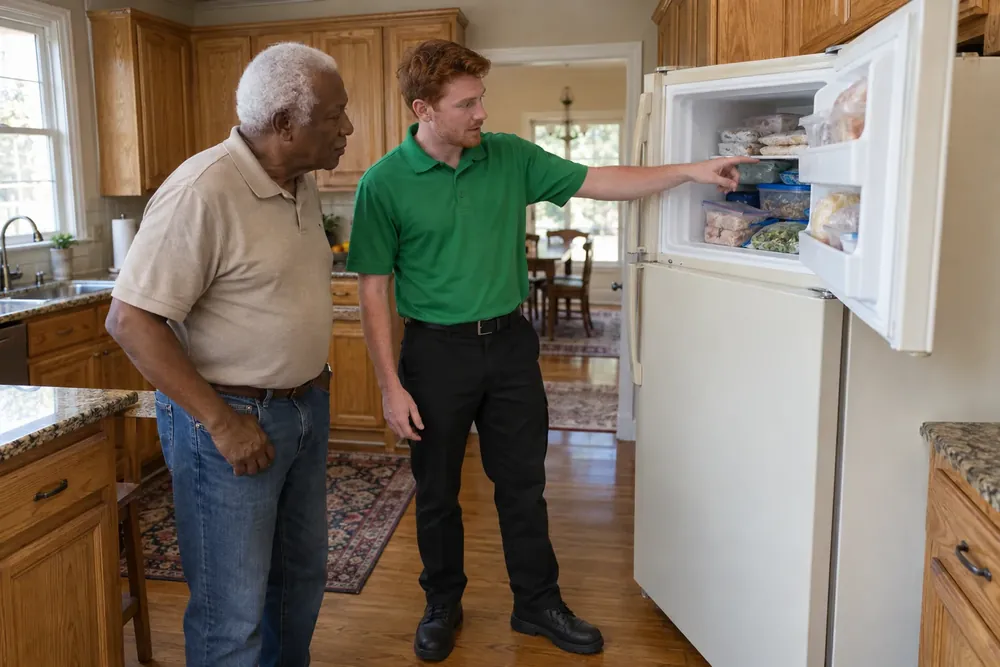
A separate fan, relay or door seal often supports repair when the cabinet and cooling system are healthy. Choosing to repair or replace a refrigerator becomes harder when a compressor failure accompanies deteriorating doors, repeated faults or poor temperature control. A cooling complaint alone does not establish a compressor failure; your technician needs to identify the cause.
Appliance comparisons
The condition of the main structure and the availability of the failed part usually decide which option deserves closer consideration. These comparisons are starting points for a diagnosis, rather than fixed rules based on age.
| Appliance | Usually worth repairing when | Usually time to replace when |
|---|---|---|
| Refrigerator | A fan, relay or gasket has failed in an otherwise sound unit | An older unit has major sealed-system damage |
| Washer | A pump, switch or belt needs replacement and the tub is sound | Tub damage or major bearing failure accompanies other wear |
| Dryer | A belt, roller or heating component is the isolated fault | Drum damage and repeated major failures affect the machine |
| Dishwasher | A seal or drain component has failed and the tub is intact | A cracked tub or repeated major leaks undermine repair |
| Oven and stove | An element or igniter is replaceable and the appliance is sound | A necessary board is discontinued or major damage remains |
| Microwave | A replaceable minor part is the only problem | Cavity or door damage makes continued use unsafe |
| Freezer | A gasket or control fault affects an otherwise sound cabinet | An older freezer has extensive sealed-system damage |
| Ice maker | A valve or separate component is available | Several assemblies have failed and essential parts are unavailable |
Washer tubs and repeated failures
An intact tub and an isolated pump or switch fault favor washer repair. Whether it is better to repair or replace a washing machine depends on the bearings, drive components and previous failures too. Recurring leaks and major tub damage can make replacing one more small part a poor decision.
Dryer repair decisions
A sound drum and an available belt or roller favor dryer repair; replace the machine when major damage and repeated failures make another repair impractical. It is cheaper to repair a dryer than replace it when the confirmed fix involves a minor part and limited labor. It is better to repair a dryer than replace it when correcting an isolated fault restores useful performance without leaving other major problems unresolved.
Dishwasher, cooking and ice-making equipment
An intact tub supports dishwasher repair; replace a machine with a cracked tub or several deteriorating assemblies when the complete repair is no longer sensible. Ovens and stoves with one failed element or igniter often merit repair. For microwaves, cavity and door condition matter alongside the failed component. A freezer or ice maker needs a diagnosis that separates a replaceable control or water valve from a larger cooling or assembly failure.
Age, energy use and replacement work
Condition matters more than age alone, but parts availability can decide whether repair is practical. A discontinued component may prevent a complete repair even when the cabinet looks good. Installation also belongs in the comparison: a replacement must fit the opening and allow suitable door clearance.
Energy use deserves a separate comparison. ENERGY STAR's refrigerator buying advice explains that size and freezer position affect consumption. Compare similar capacities and annual energy use rather than assuming any new model will use less energy.
Disposal around Pineville and across the state line
Disposal arrangements depend on the town or county handling the appliance. Mecklenburg County's recycling center page lists appliances, including empty refrigerators and freezers, among accepted materials at full-service centers; the county does not collect curbside materials.
Refrigerators, freezers and air conditioners need refrigerant recovered before final disposal under EPA safe-disposal requirements. The final disposer must ensure recovery; leave that work to the disposal service. Call about the appliance fault now. When arranging disposal, check your town's or county's own page for appliance acceptance, pickup arrangements and drop-off instructions rather than assuming one area's rules apply across the state line.
A diagnosis gives you a concrete choice
A diagnosis identifies what a repair would restore and which problems would remain. One of our local appliance repair partners will set out the parts, labor and proposed price so you can decide before repair work starts. Share previous failures and the exact display code during the call, without dismantling the appliance.